
7 Things You Should Know If You’re Considering PRP
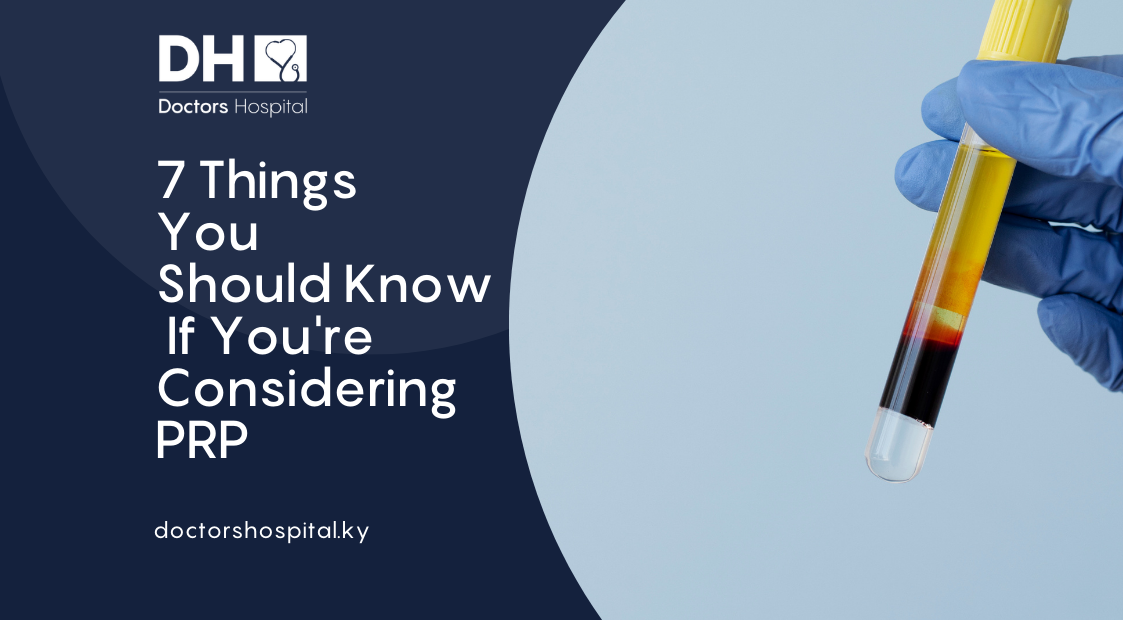
For patients looking for a non-surgical treatment option for joint pain and other musculoskeletal conditions, platelet-rich plasma therapy, commonly known as PRP therapy, offers a way to support the body’s natural healing process using your own blood. Used in orthopaedic and sports medicine care, PRP therapy is designed to promote tissue repair and pain relief in targeted areas without surgery.
If you are considering PRP treatment for joint pain, chronic pain, sports injuries, or other soft tissue concerns, here are seven important things to understand before making your decision.
1. What Is Platelet-Rich Plasma Therapy?
Platelet-rich plasma therapy uses components from your own blood to support the body’s healing process. Blood contains red blood cells, white blood cells, plasma, and platelets. Platelets are best known for their role in clotting, but they also release growth factors that support tissue repair and tissue regeneration.
During PRP treatment, a small sample of your blood is drawn and placed in a centrifuge. This spinning process separates and concentrates the platelets, creating a solution rich in growth factors. The prepared platelet-rich plasma is then injected into the injured area or specific injection site to support recovery.
Because PRP uses your own blood, it works with your body in a natural way and carries a low risk of adverse reaction.
2. How PRP Therapy Works in the Body
Once administered, platelet-rich plasma injections deliver concentrated platelets directly to damaged tissue. The growth factors released at the injection site stimulate the healing process by encouraging tissue repair and supporting tissue regeneration.
In orthopaedic applications, PRP injections may be used to support recovery in tendons, ligaments, joints, and other soft tissue structures. PRP therapy is considered part of regenerative medicine because it focuses on supporting the body’s natural healing mechanisms rather than masking symptoms.
Unlike cortisone or anti-inflammatory medications, which primarily reduce inflammation, PRP treatment aims to assist the body in repairing injured tissue over time.
3. Conditions That May Benefit from PRP
The benefits of PRP may vary depending on the condition being treated. PRP therapy is most commonly used in orthopaedic and musculoskeletal care.
Conditions that may be considered for platelet-rich plasma treatment include:
- Osteoarthritis, particularly in the knee
- Tendonitis and chronic tendon injuries such as tennis elbow
- Rotator cuff injuries
- Meniscus injuries
- Other trauma related musculoskeletal conditions
- Sports injuries affecting joints and soft tissue
Your orthopaedic specialist or orthopedic surgeon will assess your symptoms, diagnosis, and goals to determine whether PRP therapy is an appropriate treatment option for your musculoskeletal condition.
While PRP is widely used in orthopaedics, it is also sometimes explored in other areas of healthcare such as hair loss treatment. However, at Doctors Hospital, PRP is offered specifically within our Orthopaedics Department.
4. PRP Is Not a Replacement for Every Traditional Treatment
PRP therapy may be an alternative to certain traditional treatments, but it is not suitable for every patient or condition. For some individuals, physical therapy, anti-inflammatory medications such as NSAIDs, cortisone injections, or even joint replacement surgery may be more appropriate.
PRP may be considered before more invasive procedures in some cases, particularly when managing joint pain or chronic pain that has not responded to conservative measures. However, outcomes vary, and realistic expectations are important.
A consultation with a Doctors Hospital orthopaedic specialist will help clarify where PRP treatment fits within your overall treatment plan.
5. What to Expect During the Procedure
PRP treatment is performed in a clinical setting and typically takes less than one hour.
The process includes:
- Drawing a sample of your blood
- Processing the blood in a centrifuge to concentrate the platelets
- Injecting the prepared platelet-rich plasma into the injured area
Depending on your condition, you may receive a single platelet-rich plasma injection or a planned series of PRP injections.
Because PRP therapy is non-surgical, downtime is usually minimal. Many patients return to light daily activities shortly after treatment, although your specialist may recommend modifying activity levels for a short period.
6. Potential Side Effects and Safety Considerations
As with any medical procedure, there are potential side effects. Because PRP uses your own blood, the risk of allergic reaction is low. However, patients may experience:
- Mild soreness at the injection site
- Temporary swelling
- Bruising
Your provider will review your medical history before proceeding. Certain conditions, including active infections or blood disorders, may affect eligibility for PRP treatment.
While PRP is widely used, it is important to understand that not all applications are formally FDA approved for every indication. Your orthopaedic specialist will discuss the current evidence and whether platelet-rich plasma therapy is appropriate for your specific condition.
7. Results Take Time and Follow-Up Matters
PRP therapy supports the body’s natural healing process, which means improvement is gradual rather than immediate. Some patients notice changes within a few weeks, while others may see improvement over several months.
The goal of PRP treatment is to support pain relief and functional improvement by assisting tissue repair in damaged tissue. In some cases, this may contribute to faster recovery compared to traditional treatments alone, though results vary.
Follow-up appointments are an important part of the process. Your specialist will monitor your progress and determine whether additional PRP injections, physical therapy, or other interventions are needed.
Is PRP Right for You?
PRP therapy may be an option if you are experiencing ongoing joint pain, chronic pain, or limited mobility related to musculoskeletal conditions. It may also be considered for certain sports injuries or soft tissue injuries that have not improved with conservative care.
At Doctors Hospital, our Orthopaedics Department offers platelet-rich plasma therapy as part of a comprehensive, patient-centered approach to care. During your consultation, your orthopaedic specialist will review your diagnosis, discuss the benefits of PRP in your case, outline potential side effects, and develop a personalised treatment plan aligned with your goals.
If you would like to learn more about platelet-rich plasma injections or schedule a consultation, visit www.doctorshospital.ky or contact Doctors Hospital Orthopaedics directly.